
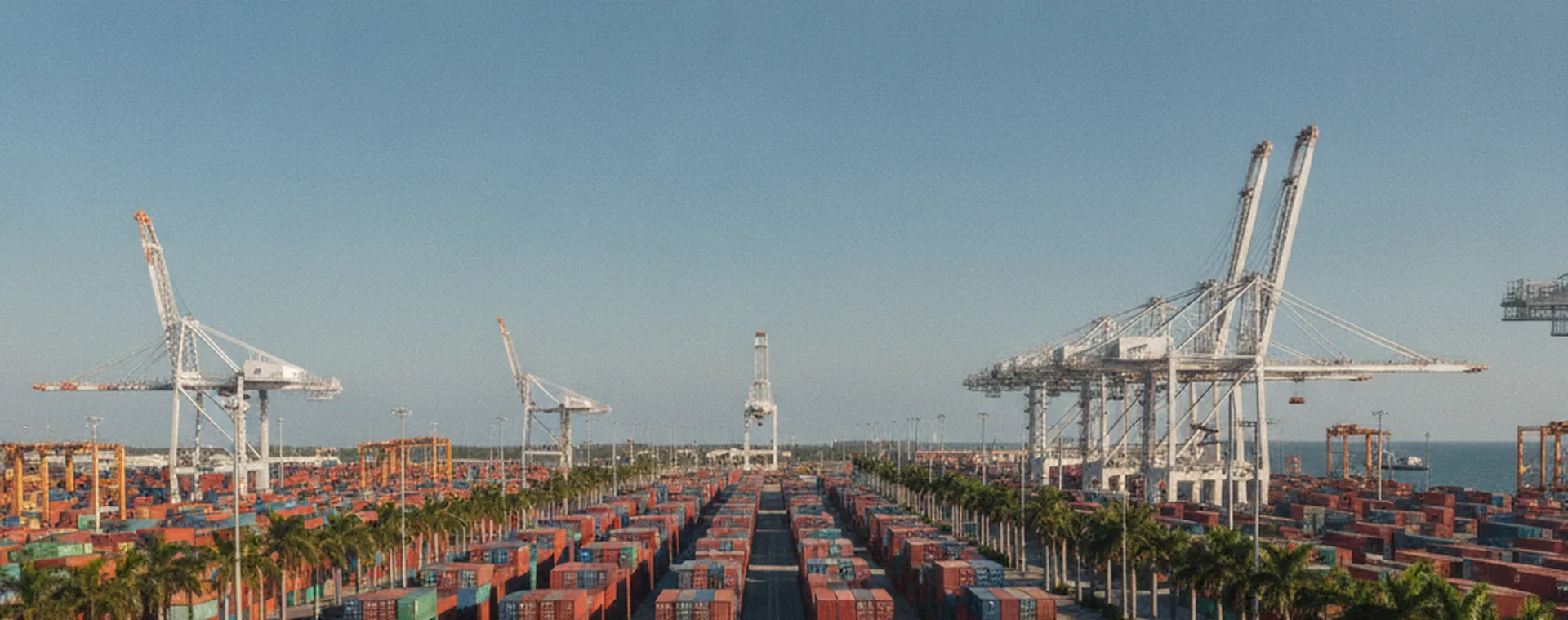
Miami workplace accident lawyer
Which system covers you, and the claim against everyone who is not your employer
This firm does not handle workers’ compensation claims. It handles the third-party claim — the case against the equipment manufacturer, the property owner, the contractor, the driver or the vessel that caused the injury — which runs alongside a compensation claim rather than replacing it. The first question is which system covers you at all. Most Florida workers are under chapter 440, where Fla. Stat. § 440.11 makes compensation the exclusive remedy against the employer. A worker hurt on a pier, wharf or marine terminal is likely under the federal Longshore and Harbor Workers’ Compensation Act, which carries its own third-party action against a negligent vessel under 33 U.S.C. § 905(b). Miami-Dade has PortMiami, the airport cargo district, the Medley and Doral warehouse corridors and a hospitality workforce, and the system covering a worker differs across all of them. Construction site injuries have their own page. What follows is the Miami-Dade County part.
- Miami-Dade County crashes, 2024
- 60,000Florida Department of Highway Safety and Motor Vehicles
- People injured
- 29,359In Miami-Dade County alone, in one year
- People killed
- 272Down from 325 the year before
- Systems that might apply
- ThreeFlorida comp, the federal Longshore Act, or the Jones Act. Where you work decides.
Quick answers about Miami workplace injury claims
- Do you handle workers’ compensation?
- No. Comp is the claim against your own employer and is not part of this practice. The third-party claim is, and the two run alongside each other.
- How do I know which system covers me?
- Largely by where you were working. Florida chapter 440 for most jobs; the federal Longshore Act for maritime employment on navigable waters and adjoining piers, wharves and terminals; the Jones Act for a master or crew member of a vessel.
- I was hurt at the port. Is that different?
- Probably yes. The Longshore Act covers maritime employment, and § 903(a) reaches injuries on navigable waters and on any adjoining pier, wharf, dry dock, terminal or other adjoining area customarily used in loading, unloading, repairing or building a vessel.
- Can I sue a ship?
- Under 33 U.S.C. § 905(b), a covered worker injured by the negligence of a vessel may bring an action against that vessel as a third party. It is not based on unseaworthiness, and there are limits where the employer was the vessel owner.
- What if I was hurt in a warehouse?
- Ordinary chapter 440 comp against the employer, and a third-party claim against whoever else caused it — a forklift or machine manufacturer, a delivery company, a maintenance contractor, a property owner.
- How long do I have?
- Two years for a Florida negligence claim accruing on or after March 24, 2023. The compensation side — state or federal — has its own separate notice and filing deadlines.
01 The law, once
02 Which system covers you
Where workplace injury claims arise in Miami-Dade County
Before anyone talks about what a work injury is worth, there is a question almost nobody asks: which compensation system you are actually in. In Miami the answer is not always the obvious one, and it changes everything that follows.
- Florida workers’ compensation, chapter 440The default for most employment in the state, and the exclusive remedy against the employer.
- The federal Longshore ActMaritime employment on navigable waters and adjoining piers, wharves and terminals. 33 U.S.C. §§ 902(3), 903(a)
- The Jones ActA master or crew member of a vessel, written out of the Longshore Act by § 902(3)(G).
- PortMiami and the cruise terminalsWhere the Longshore question actually arises, and where a § 905(b) vessel claim can exist.
- The airport cargo districtGround handling, freight and warehousing, with heavy equipment and constant vehicle movement.
- Medley, Doral and the warehouse corridorsDistribution work, where the third-party claim is usually a machine or a carrier.
- Hotels and restaurants across the countyEquipment, contractors and staffing arrangements that complicate who the employer is.
- Agricultural work in south DadeMachinery, chemicals and transport, with compensation treated differently for farm work.
03 Which system
04 Suing a vessel
05 Off the water
06 The record
07 Examples of situations
Situations this office sees in Miami-Dade County
The following are examples of the kinds of situations that arise in this county. They are illustrations of how the rules apply, not descriptions of past cases, and they do not predict any outcome. Every claim turns on its own facts, its own coverage and its own medical record.
A longshore worker hurt on a terminal
Likely the federal Longshore Act, with a § 905(b) action if a vessel’s negligence caused it.
A forklift that failed in a warehouse
Comp against the employer, and a product claim against the manufacturer.
A hotel worker injured by a contractor’s equipment
The contractor is not your employer, so chapter 440 does not shield it.
A staffing agency worker
Section 440.11(2) can make you a borrowed employee of the company using you, which extends its immunity.
A delivery driver struck on a loading dock
An ordinary motor vehicle claim alongside compensation.
A crew member of a vessel
Neither system — that is the Jones Act, covered on the crew injuries page.
08 The evidence
Evidence that exists here and often goes uncollected
Almost every camera that saw the crash overwrites itself within days or weeks. The difference between a disputed liability case and a straightforward one is usually whether someone asked for the footage while it still existed.
The written injury report
It starts the compensation claim and fixes the date.
Make, model and serial number of any machine
A product claim against a manufacturer begins with these three facts.
The vessel name and berth, where one was involved
Ships leave. This is a first-week fact or it is lost.
Every company present on the site
Contractors, vendors, staffing agencies, carriers.
Photographs before anything is changed
The equipment, the guard, the floor, the lighting.
OSHA inspection and citation history
Public and searchable by establishment name.
Equipment maintenance and inspection records
Where notice of a defect usually lives.
Names of the crew working near you
Workforces at ports and warehouses rotate quickly.
09 The report
10 The office
Miami workplace injury questions, answered
Do you handle workers’ compensation claims?
No. Workers’ compensation is the claim against your own employer, and it is not part of this practice.
What is handled here is the third-party claim — the case against the manufacturer, contractor, property owner, driver or vessel that caused the injury. The two run alongside each other.
If what you need is a compensation lawyer, you will be told that on the first call rather than signed up and sorted out afterward.
How do I know which compensation system covers me?
Mostly by where you were working when you were hurt.
Florida chapter 440 is the default for most employment in the state. The federal Longshore and Harbor Workers’ Compensation Act covers maritime employment — longshore workers, ship repairers, shipbuilders and ship-breakers under 33 U.S.C. § 902(3). A master or member of a crew of a vessel is in neither; that is the Jones Act.
Section 903(a) sets the location test for the Longshore Act: injuries on navigable waters, including any adjoining pier, wharf, dry dock, terminal, building way, marine railway or other adjoining area customarily used in loading, unloading, repairing, dismantling or building a vessel.
It is a question of fact about your job and your location, and getting it wrong at the start costs time that cannot be recovered.
I was injured at the port. What is different?
Potentially the entire framework.
If you are covered by the Longshore Act, benefits come through a federal scheme rather than Florida’s, with its own filing requirements and its own forum.
And it carries a third-party action Florida comp has no equivalent of: under 33 U.S.C. § 905(b), a covered worker injured by the negligence of a vessel may sue that vessel as a third party.
The practical urgency is that vessels leave. The name, operator, flag, berth and date should be captured in the first week.
Can I really bring a claim against a ship?
Where a vessel’s negligence caused the injury and you are covered by the Act, yes — that is what § 905(b) provides, and the employer is not liable to the vessel for those damages.
There are boundaries. The liability is not based on the warranty of seaworthiness. A worker employed by the vessel to provide stevedoring services cannot bring the action where the injury was caused by the negligence of those providing stevedoring services to the vessel. And where a ship repair or shipbuilding worker’s employer was itself the vessel’s owner or operator, the action is not permitted against that employer.
Which of those applies turns on the contracts and on who was doing what, and that is established from documents rather than from recollection.
I work through a staffing agency. Who is my employer?
Possibly both, and § 440.11(2) is why.
Where a company uses the services of employees of a help supply services company, that worker is considered a borrowed employee of the company using them, and the immunity from liability extends to that company and its employees.
So the business you report to every day may have the same protection from suit that your agency does — which makes identifying the genuinely independent third parties on the site more important, not less.
What third-party claims come out of warehouse work?
Most often a product claim: a forklift, pallet jack, conveyor, lift or press that failed, where the claim is against the manufacturer and sits entirely outside chapter 440.
Then a maintenance or service contractor who worked on the equipment, a carrier whose driver caused the injury, and sometimes the owner of the building where a condition rather than the work caused it.
The make, model and serial number of the machine are the first three facts to capture, because the product case is built from them.
Is an OSHA citation useful?
Yes, and it is public.
OSHA’s establishment search returns inspections, citations and penalties by company name, free and without discovery. A citation on the same hazard before the injury is evidence of the standard and of notice.
It does not establish civil liability by itself, and a defendant will point that out. It still changes what they are willing to argue.
What should I do in the first week?
Report the injury to your employer in writing and get medical care. That starts the compensation claim and fixes the date.
Photograph the equipment and the condition before either is changed, and record the make, model and serial number of any machine. Where a vessel was involved, get its name and berth.
Write down every company that was present and the names of people working near you. Port and warehouse workforces rotate, and those names get much harder to find.
How long do I have?
Two years for a Florida negligence claim accruing on or after March 24, 2023, under Fla. Stat. § 95.11.
The compensation side has separate deadlines, and they differ between the Florida system and the federal Longshore Act. That is one reason the two tracks are identified at the start rather than sequentially.
Where would the case be filed?
A Florida third-party claim at the Miami-Dade Circuit Court, 73 West Flagler Street. A Longshore Act compensation claim is a federal administrative proceeding rather than a court case, and a § 905(b) action against a vessel may belong in federal court.
What does it cost?
The first conversation costs nothing and commits you to nothing.
Injury cases are handled on a contingent attorney’s fee, meaning no attorney’s fee unless there is a recovery. Case expenses are governed by the written representation agreement, including who pays them if there is no recovery.
Who will actually handle my case?
Jose A. Dapena. You deal with your attorney directly at every stage rather than through an intake department or a case manager.
He has practiced in Florida since 1998, Florida Bar number 152358. The first job on a work injury is working out which system covers you and who the third parties are, and that happens before anyone argues about value.
11 Keep reading
- Florida workplace injury lawThe statutes, the deadlines and the defenses, in full
- The Miami officeEverything the office handles, and the area it covers
- Personal injury in FloridaThe whole practice, and the other 22 kinds of claim
This page is general information about Florida law, not legal advice about your case. Published by Jose A. Dapena, P.A. Last updated October 2026.
Free case review with a Miami workplace injury lawyer
No fee to talk and no obligation. You deal with your attorney directly, at every stage.