
Miami and Tampa premises liability lawyer
Falling is not the case. Proving they knew is.
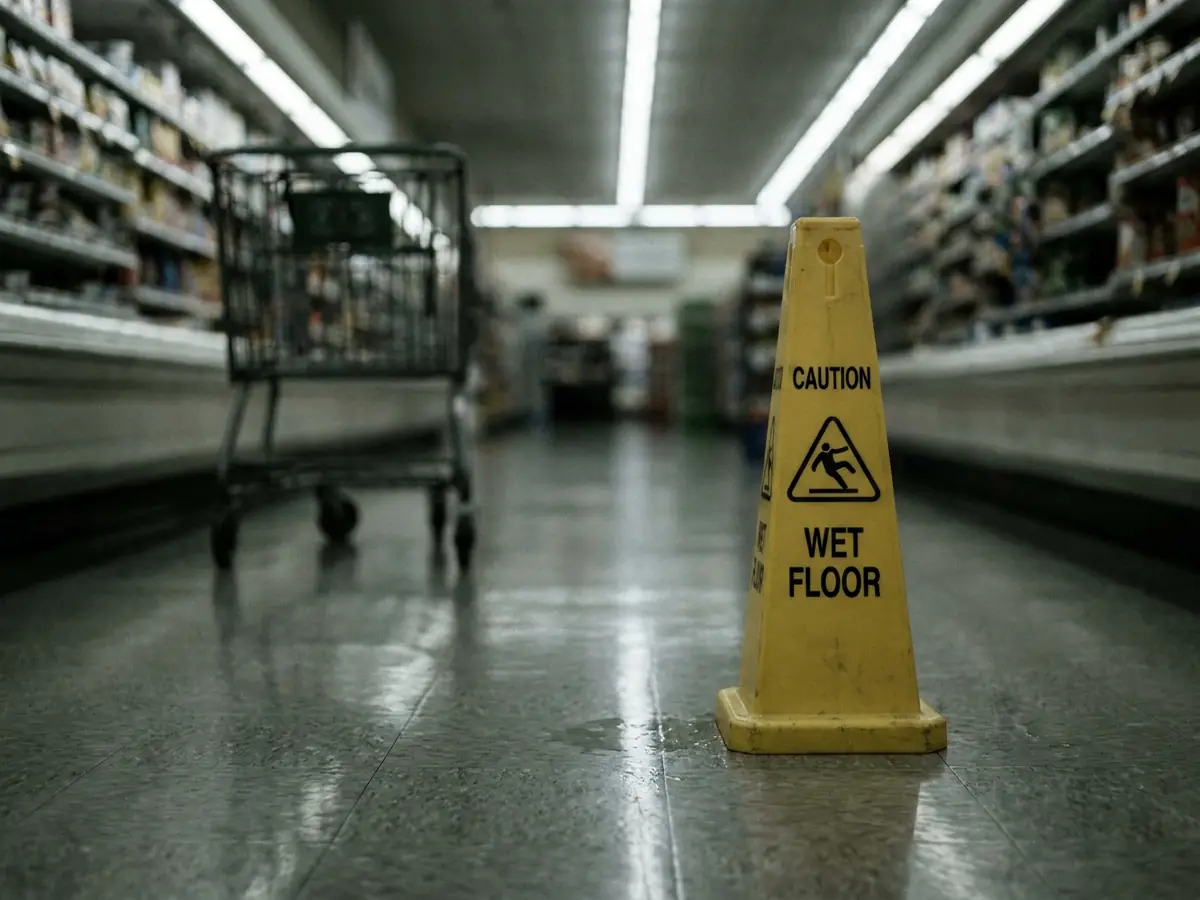
Most people assume that being hurt in a shop because of something on the floor is the end of the argument. In Florida it is barely the beginning. The statute puts the burden on the injured person to prove the business knew about the hazard, or should have.
- What you must prove
- KnowledgeActual or constructive. Fla. Stat. § 768.0755
- Deadline to sue
- 2 yearsFalls on or after 24 March 2023. Fla. Stat. § 95.11
- Video retention
- 30 daysTypical. Many systems overwrite far sooner
- Fault limit
- 50%Over half at fault and the claim is barred. § 768.81
01 The statute nobody expects
02 What makes a case provable
03 Where these cases come from
Miami-Dade
Miami-Dade premises work runs through supermarkets, hotels and apartment complexes, and negligent security is a recurring matter here — parking structures, stairwells and commercial properties with a documented history of prior incidents. Claims are filed at the Circuit Court on West Flagler, or the South Dade Justice Center for the south of the county.
Hillsborough
Hillsborough premises cases come from retail along Dale Mabry, hotels near the airport and the big distribution sites along the interstate, where the floor hazard is as often a loading dock as a spill. Filing is at the Circuit Court on East Twiggs Street.
04 What damages a claim
- Leaving without reporting it, so there is no incident report at all.
- Not photographing the hazard before someone cleans it up.
- Waiting weeks, by which time the video has been overwritten.
- Accepting a gift card or a payment of the ER bill in exchange for a signature.
Frequently asked questions about Florida premises liability
There was no warning sign. Is that enough?
It helps, but on its own it is not the test. § 768.0755 asks whether the business knew or should have known the hazard was there.
A missing sign matters most in combination with something that shows duration — dried edges, tracked footprints, a sweep log with a long gap.
The store had me fill out an incident report. Was that a mistake?
No, and the report is useful — it fixes the date, the location and the fact that it was reported. Ask for a copy.
What is worth avoiding is the recorded statement that often follows, and any document that reads as a release in exchange for a small immediate payment.
Tell Jose what happened
A free review of your premises liability case, with no obligation, and no fee and no costs unless there is a recovery. English or Spanish, whichever you would rather use. You speak with Jose A. Dapena directly at every stage, not with an intake department — and if there is no claim worth bringing, he will tell you that.