
Personal injury
The police never came to my accident. Can I still make a claim?
Yes. A report is useful evidence, but nothing in Florida law makes it a condition of the claim.
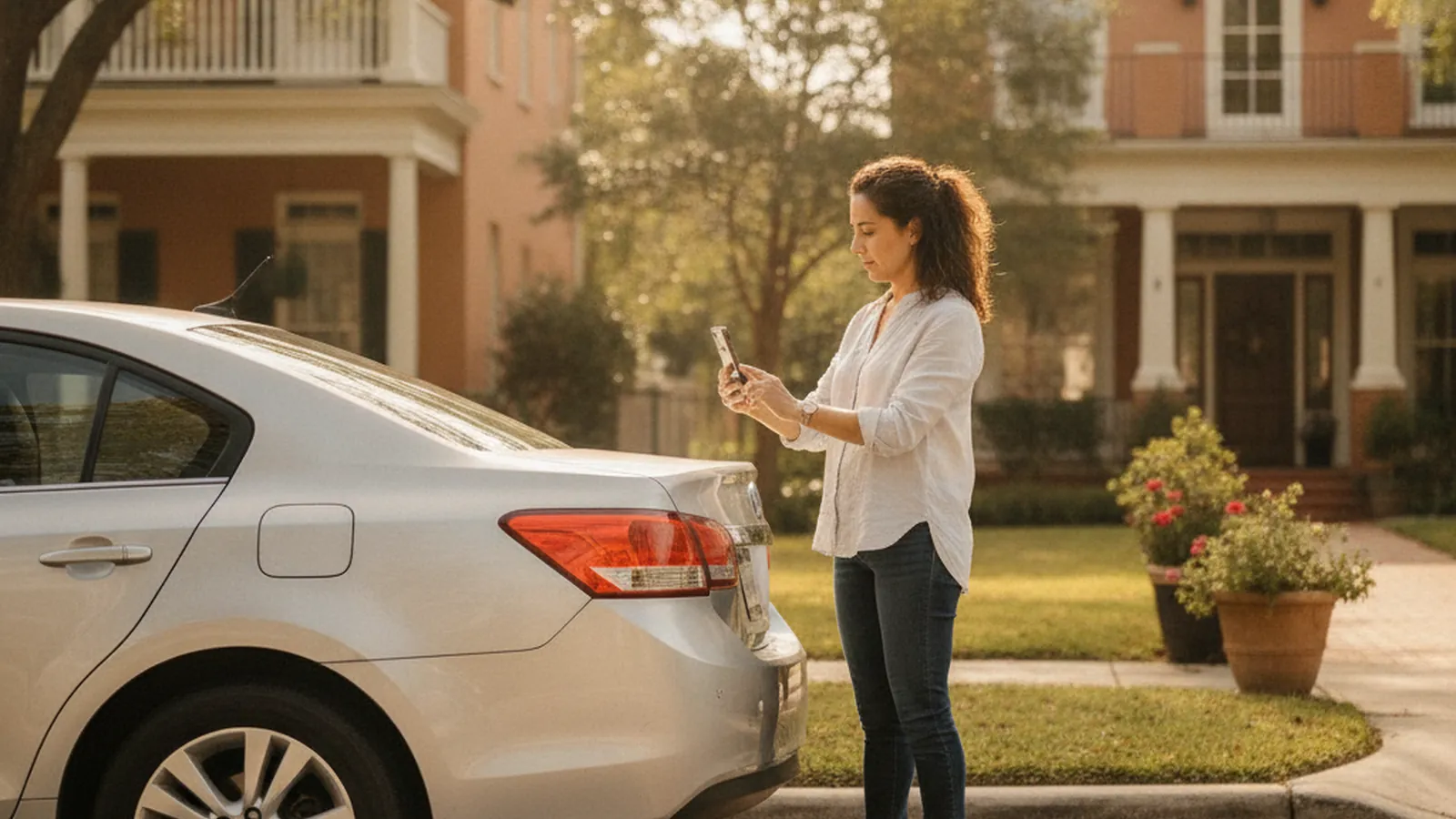
Yes. A police report is evidence of what happened, who was there and which insurance applies. It is not a condition of Personal Injury Protection, and it is not a condition of the claim against the driver. What Florida does require is that you notify the police when someone is hurt or the property damage reaches $2,000, and, for a minor crash with no officer, that you send a written report to the state within ten days. If neither happened, the claim is still there, and the work is to build the record the report would have given you.

01 What the claim needs
A missing police report does not end a claim, and what replaces it
The claim needs facts, and a report is only one place they can come from. Nothing in the Florida no-fault statute makes a police report a condition of Personal Injury Protection. It asks for initial care within fourteen days (§ 627.736(1)(a)). The claim against the driver turns on fault and on whether the injury meets the threshold, and neither is established by a report.
What a report gives you is a convenient record. Under § 316.066(1)(b) a long-form report records the date, time and place, a description of the vehicles, the names and addresses of the drivers and passengers, the witnesses, the officer, and the insurers. Each of those can be rebuilt from other sources if there is no report.
There is one situation where a report matters more than usual: when the other driver left. A hit and run is usually a claim under your own uninsured motorist coverage, and many policies require prompt police notice (what a hit-and-run claim needs). If that is your situation, tell the police now.
Otherwise the missing report mainly costs you convenience. It does not cost you the claim, and the evidence that would have been in it can still be collected.
A report is a convenient record of the crash. Nothing in Florida law makes it a condition of the claim.
02 What Florida requires
When Florida requires you to report a car accident
You must notify the police when someone is hurt or the damage is at least $2,000. The driver of a vehicle in a crash resulting in injury or death, or damage to any vehicle or other property in an apparent amount of at least $2,000, must immediately give notice by the quickest means to the local police department if the crash is in a municipality, and otherwise to the county sheriff or the nearest Florida Highway Patrol office (§ 316.065(1)). Failing to do so is a noncriminal traffic infraction.
The threshold is $2,000, not $500. Older articles, and some insurance websites, still give a lower figure from earlier versions of the statute. The current statute and the state’s own crash-report page both say $2,000.
You also have duties at the scene whether or not an officer comes. Each driver must give their name, address and vehicle registration number, show a license if asked and if available, and render reasonable assistance to anyone injured (§ 316.062). Each party must also provide proof of insurance (§ 316.066(1)(d)).
When an officer does investigate, the form depends on what happened. A long-form report is required when the crash caused death or injury, or any indication of complaints of pain or discomfort by anyone in it, when it involved a violation of the impaired-driving statute, when a vehicle needed a wrecker, or when a commercial vehicle was involved (§ 316.066(1)(a)). Otherwise the officer completes a short-form report or gives the drivers an exchange-of-information form (§ 316.066(1)(c)).
That first rule has a practical consequence. If you said you were hurt at the scene, the crash is a long-form crash. If you said you were fine and an officer wrote a short form, the report may say so, and an injury that shows itself later has to be explained against that.
03 When nobody comes
What to do when the police do not respond to the crash
If someone was hurt or the damage is $2,000 or more, make the call and make a record that you did. Write down the time, the number you called, the dispatcher’s name or the incident number, and what you were told. If the agency says it is not sending an officer, ask how it wants the crash reported, and write down the answer. Agencies handle this differently, and a note of what you did is what you will want later.
If the crash is minor and no law enforcement report is required, file a self-report. The driver of a vehicle in a crash causing damage that does not require a law enforcement report must submit a written report to the Department of Highway Safety and Motor Vehicles within ten days of the crash, on the form the department approves (§ 316.066(1)(e)). The department publishes the Driver Report of a Traffic Crash form on its crash reports page and accepts it by mail or electronically.
Count the ten days from the crash, not from when you decide to file. It is a short window, and it is easy to miss when the first days are about the car and the doctor.
Build the record yourself in the meantime. Photographs of the vehicles, the plates, the road and the signs; the other driver’s name, phone, insurance card and license plate; the names and numbers of witnesses; the time and place; and your own written account of what happened, in order, before it fades.
04 Getting the report
How to get a Florida crash report once there is one
For reports filed with the state, the quickest route is the Florida Crash Portal. The Department of Highway Safety and Motor Vehicles sells crash reports through its portal for $10.00 per report, with a $2.00 convenience fee on each transaction, and a purchased report is available online immediately and must be downloaded within 48 hours (FLHSMV, Traffic Crash Reports page).
Crash reports are confidential for 60 days, but not from you. The statute makes a report that reveals personal information confidential for sixty days after it is filed, and in the same section allows it to be made available immediately to the parties involved, their legal representatives, their insurers and their insurance agents (§ 316.066(2)(a) and (b)). Someone who is not one of those people has to wait.
The agency that wrote it depends on where the crash was. On the expressways it is the Florida Highway Patrol. In Miami-Dade it is the Miami-Dade Sheriff’s Office in unincorporated areas or the municipal department for the city where it happened. In Hillsborough it is the Tampa Police Department inside Tampa, the Hillsborough County Sheriff’s Office elsewhere in the county, or the Highway Patrol on the interstates. Each agency’s counter, hours and fees are in how to get your report in Miami-Dade and in Tampa and Hillsborough County.
The officer has ten days to file a long-form report after finishing the investigation. That is why a report is often not available the next morning, and the agency can tell you when to expect it (§ 316.066(1)(a)).
05 What a report does not do
What a report can and cannot be used for
What you tell the officer for the report is protected. A crash report made by a person involved, and any statement made to an officer to complete it, may not be used as evidence in any trial, civil or criminal (§ 316.066(4)). The same does not hold for what you tell an insurance adjuster.
It is not a finding of fault. A report records what an officer saw and was told. How the fault is divided is a separate question, decided on evidence (how the fault percentage works).
If the report is wrong, ask the agency that wrote it. Whether and how a report can be corrected or supplemented is up to the agency. A mistake about the date, the location, a name or a vehicle is worth raising early, and in writing.
It does identify the insurers, and you will want that. A long-form report is required to list the names of the insurance companies for the parties (§ 316.066(1)(b)). For a driver who left, there may be no insurer to list, and that changes what claim you have.
06 An example
A Sunday night, a busy dispatcher and a stiff neck
A driver is rear-ended at an intersection on a Sunday night. The other driver apologizes, they exchange phone numbers and insurance cards, and a call to the police is answered with the news that no officer is available. The other driver offers to settle the bumper in cash. They agree and go home.
Over the next week the driver’s neck stiffens. They go to an urgent care clinic on day six, inside the fourteen days, and PIP covers it. Three weeks in, the other driver’s insurer says it has no record of an accident.
There is no police report. What there is: photographs of both cars at the scene, the other driver’s insurance card photographed on the roadside, a text from the other driver apologizing, the call to the police with its time on the phone record, the urgent care record dated day six, and a self-report filed with the state within ten days. The claim is slower to build, and it is not gone.
A constructed example, written to show how the rule works. It is not a case this firm handled and it is not a promised result.
07 What to do now
- Call the police and keep a record of the callIf anyone is hurt or the damage is $2,000 or more, Florida requires it. Write down the time, who you spoke to and what you were told.
- Photograph everything before the cars moveBoth vehicles, plates, the road, the signs and signals, the other driver’s insurance card and license, and the surrounding businesses with cameras.
- Get the other driver’s details and a witness if you canName, address, phone, plate and insurer. A person with no connection to either of you who saw it is worth more than any report.
- File a self-report with the state within ten days if no report was requiredUse the Driver Report of a Traffic Crash form from the department’s crash reports page. Keep a copy and the date you sent it.
- Be seen by a doctor within fourteen daysIt is the condition of PIP and it creates the medical record of the injury, whether or not there is a police report.
- Order the report as soon as it existsThrough the Florida Crash Portal at $10.00 plus the convenience fee, or from the agency that wrote it. As one of the parties, you can get it before the sixty-day confidential period ends.
08 What an attorney would look into
- Whether the crash met the injury or $2,000 threshold that required notice to the police, and whether notice was given
- Whether any agency wrote a report of any kind, including a short form or an exchange-of-information form, and what it says about injuries
- Whether a self-report was filed with the state and when
- What the call to the police, a 911 call or a dispatch record shows, which can place the crash in time
- What independent evidence exists in place of the report: photographs, video, witnesses, vehicle data and the other driver’s own messages
- Whether the other driver’s identity and insurance are established, and whether the driver left the scene
- Whether the report as written is consistent with what happened, and whether anything in it needs to be corrected
09 The sources
- Fla. Stat. § 316.065 Duty to notify the policeNotice required for injury, death or damage of at least $2,000. Failure is a noncriminal traffic infraction.
- Fla. Stat. § 316.066 Crash reportsWhen a long-form report is required, the short form and exchange form, the ten-day self-report, confidentiality for sixty days and access for the parties, and the rule that statements made for the report are not evidence at trial.
- Fla. Stat. § 316.062 Duty to give information and render aidEach driver gives name, address and registration, shows a license on request, and renders reasonable assistance.
- Fla. Stat. § 627.736 Personal Injury ProtectionInitial care within 14 days. No police report is required by this section.
- FLHSMV Traffic crash reportsThe Florida Crash Portal, the $10.00 fee, and the Driver Report of a Traffic Crash for minor crashes.
More questions
Is it illegal not to report a car accident in Florida?
If someone was injured or killed, or the damage is at least $2,000, the driver must notify the police, and failing to do so is a noncriminal traffic infraction (§ 316.065(1)). It is not a crime and it does not end a civil claim.
For a minor crash with no officer, the written report to the state within ten days is the separate requirement.
The other driver asked me not to call the police and offered cash. What should I do?
Call anyway if anyone is hurt or the damage is $2,000 or more, because Florida requires it. An offer to settle on the spot is made before anyone knows whether you are injured or what the damage is, and it can end the matter for less than the real cost.
If you take the money, write down exactly what was agreed, and see a doctor within fourteen days regardless.
Can the insurance company deny my claim because there is no police report?
Nothing in the no-fault statute makes a report a condition of PIP, and a report is not an element of a claim against the driver. An insurer can ask for one, and a hit-and-run claim under your own policy is the case where the policy may require police notice.
If an insurer says a report is required, ask which part of the policy or statute says so.
The report says something that is not true. Can I have it fixed?
Whether and how a report can be corrected or supplemented is up to the agency that wrote it. Raise the error in writing and early, with whatever shows the right answer.
What you said to the officer for the report cannot be used as evidence at trial (§ 316.066(4)), which limits the harm, but a wrong fact in the report can still affect how an insurer handles the claim.
How soon can I get the report?
Not usually the same day. The officer has ten days after finishing the investigation to file a long-form report (§ 316.066(1)(a)). Once it is filed with the state you can purchase it through the Florida Crash Portal.
Because you are one of the parties, the sixty-day confidentiality period does not apply to you.
What does it cost to have my situation looked at?
The first consultation on an injury matter is free. Representation is on a contingency fee, generally payable only on recovery, with case expenses governed by the written agreement.
Jose A. Dapena can tell you in a short call what a missing report changes in your claim, and what it does not.
No report, and not sure what that means for your claim?
Tell Jose A. Dapena what happened, who you called and what you have. He will tell you what is still open, what to collect first and whether anything you have to file is close to its date. The call is free and there is no obligation.